






Eyes in the Sky for Everyone: How One Startup Is Changing Public Safety Forever
Revolutionary drone startup launches affordable alternative to police helicopters — and the implications for law enforcement, emergency response, and taxpayers couldn’t be more significant. For decades, police helicopters have been the gold standard for aerial surveillance, search-and-rescue operations, and high-speed pursuits. But at a cost of $500 to $1,500 per flight hour, they’ve remained a luxury that only well-funded departments in large metropolitan areas could afford. Now, a bold new company is threatening to turn that model on its head entirely.
—
The Problem With Traditional Police Helicopters
To understand why this innovation matters, you first need to appreciate the scale of the problem it’s solving.
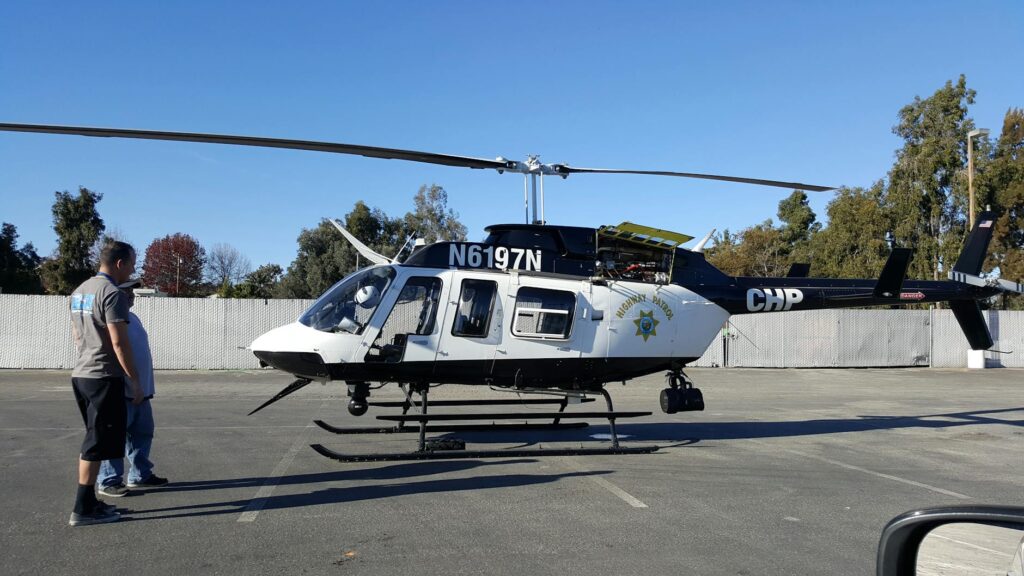
Police helicopters are extraordinarily expensive to operate. A single law enforcement helicopter costs anywhere between $500,000 and $3 million to purchase outright. Maintenance, fuel, pilot salaries, and hangar fees push annual operating costs well into the hundreds of thousands of dollars. As a result, the vast majority of police departments across the United States, the United Kingdom, and elsewhere simply cannot afford to maintain an aerial unit.
When smaller departments encounter a fleeing suspect, a missing child, or a large-scale disaster, they either go without aerial support or rely on costly mutual aid agreements with neighboring jurisdictions — agreements that take time to activate and aren’t always available.
The gap between large-city departments and rural or underfunded agencies has created a serious disparity in public safety capability. That disparity, some argue, costs lives.
—
Enter the Revolutionary Drone Startup
A technology company has emerged with a clear mission: democratize aerial law enforcement capabilities through advanced autonomous drone systems. Their flagship product is a ruggedized, AI-powered drone platform designed specifically for public safety applications — one that can be deployed in under two minutes, fly for up to 90 minutes on a single charge, and operate autonomously using onboarding machine learning algorithms.
The price point is where things get truly disruptive. While exact figures vary depending on configuration, the company’s systems are reported to cost a fraction of traditional helicopter operations — some estimates suggest operational costs as low as $20 to $50 per flight hour, compared to the hundreds or thousands charged by manned aircraft.
—
What Makes This Drone Different?
Not all drones are created equal, and skeptics are right to ask what separates this system from the consumer-grade quadcopters already on the market. The answer lies in several key technological advances:
Advanced AI and Autonomous Navigation
The drone uses onboard artificial intelligence to track moving subjects, navigate complex urban environments, and avoid obstacles without constant human input. Officers can issue high-level commands — “follow that vehicle” or “search this grid” — and the drone handles the technical execution independently.
Thermal Imaging and Low-Light Capability
Equipped with both standard high-definition cameras and thermal imaging sensors, the drone can operate effectively at night and in low-visibility conditions. This is critical for nighttime pursuits, search-and-rescue in wooded areas, and disaster response.
Real-Time Data Sharing
Live video and telemetry data stream directly to dispatch centers, body cameras, and mobile command units. This means officers on the ground receive real-time aerial intelligence, dramatically improving situational awareness and coordination.
Weather Resistance
Unlike many commercial drones, this system is built to operate in wind, light rain, and temperature extremes — conditions that frequently ground smaller UAVs and delay critical responses.
—
Real-World Applications Already Making an Impact
Early adopters of the technology have reported remarkable results across a range of scenarios.
In one widely cited case, a sheriff’s department in a rural county used the system to locate a missing elderly man with dementia within 23 minutes of deployment. Previously, that same search would have required calling in a state police helicopter — a process that often takes over an hour just to get the aircraft in the air.
In urban environments, police agencies have used the drones to assist in pursuit situations, providing overhead tracking that allows ground units to set up containment perimeters rather than engaging in dangerous high-speed chases. Studies have consistently shown that aerial support during pursuits significantly reduces the likelihood of accidents and injuries.
Fire departments have also taken notice. The drones can map wildfire perimeters in real time, identify hotspots invisible from the ground, and guide firefighting crews with unprecedented precision.
—
The Drone as an Affordable Alternative to Police Helicopters
The startup’s pitch to law enforcement agencies is straightforward: you don’t have to choose between no aerial capability and an unaffordable helicopter program. Their system serves as a true affordable alternative to police helicopters — not a lesser substitute, but a genuinely competitive option for the vast majority of day-to-day aerial law enforcement tasks.
Industry analysts suggest that up to 80% of police helicopter missions could be handled effectively by an advanced autonomous drone system at a fraction of the cost. That’s a compelling statistic for budget-constrained departments trying to serve growing populations with shrinking resources.
Some larger departments are already exploring a hybrid model, where drones handle routine surveillance, pursuits, and searches while helicopters are reserved for missions that genuinely require a human presence in the air — such as long-range intercepts or mass casualty events requiring medical transport.
—
Addressing Privacy and Ethical Concerns
No conversation about expanded aerial surveillance can ignore the legitimate privacy concerns that accompany it.
Civil liberties advocates have raised important questions about the implications of cheaper, more pervasive drone surveillance. If cost is no longer a barrier to aerial monitoring, could law enforcement agencies begin conducting surveillance at a scale that was previously impractical? What safeguards exist to prevent misuse?
The startup has proactively engaged with these concerns. Their system includes geofencing technology that restricts flight in sensitive areas, mandatory logging of all flights for public accountability, and built-in data retention limits that prevent indefinite storage of surveillance footage. The company has also partnered with civil liberties organizations to develop best-practice guidelines for responsible deployment.
Legislators in several states are also working to establish clear legal frameworks governing drone use by law enforcement — an important step toward ensuring that innovation in this space serves the public interest rather than eroding it.
—
What This Means for the Future of Public Safety
The implications of this technology extend far beyond police work. Emergency medical services, wildlife conservation agencies, border patrol, and disaster management organizations are all potential customers. The startup is reportedly already in conversations with international clients, suggesting that this revolution in aerial capability could have a global footprint within the next few years.
For taxpayers, the calculus is simple: better public safety outcomes at dramatically lower cost. For communities that have long gone without meaningful aerial support, this technology represents a genuine leap forward in protection and emergency response capability.
The age of the police helicopter isn’t over — but it may be entering a phase of profound transformation. And sitting at the center of that transformation is a small startup with a big idea and the technology to back it up.
—
The Bottom Line
Innovation has always disrupted the status quo, and public safety is no exception. As autonomous drone technology continues to mature, the barriers that once made aerial law enforcement the exclusive domain of well-resourced agencies are coming down fast. Whether this particular company becomes a household name or serves as the pioneer that clears the path for others, the message is clear: the sky is no longer out of reach.